It was so shockingly cold that there was a momentary fear of a new ice age. Scientists believe that human activity contributed to historic weather.
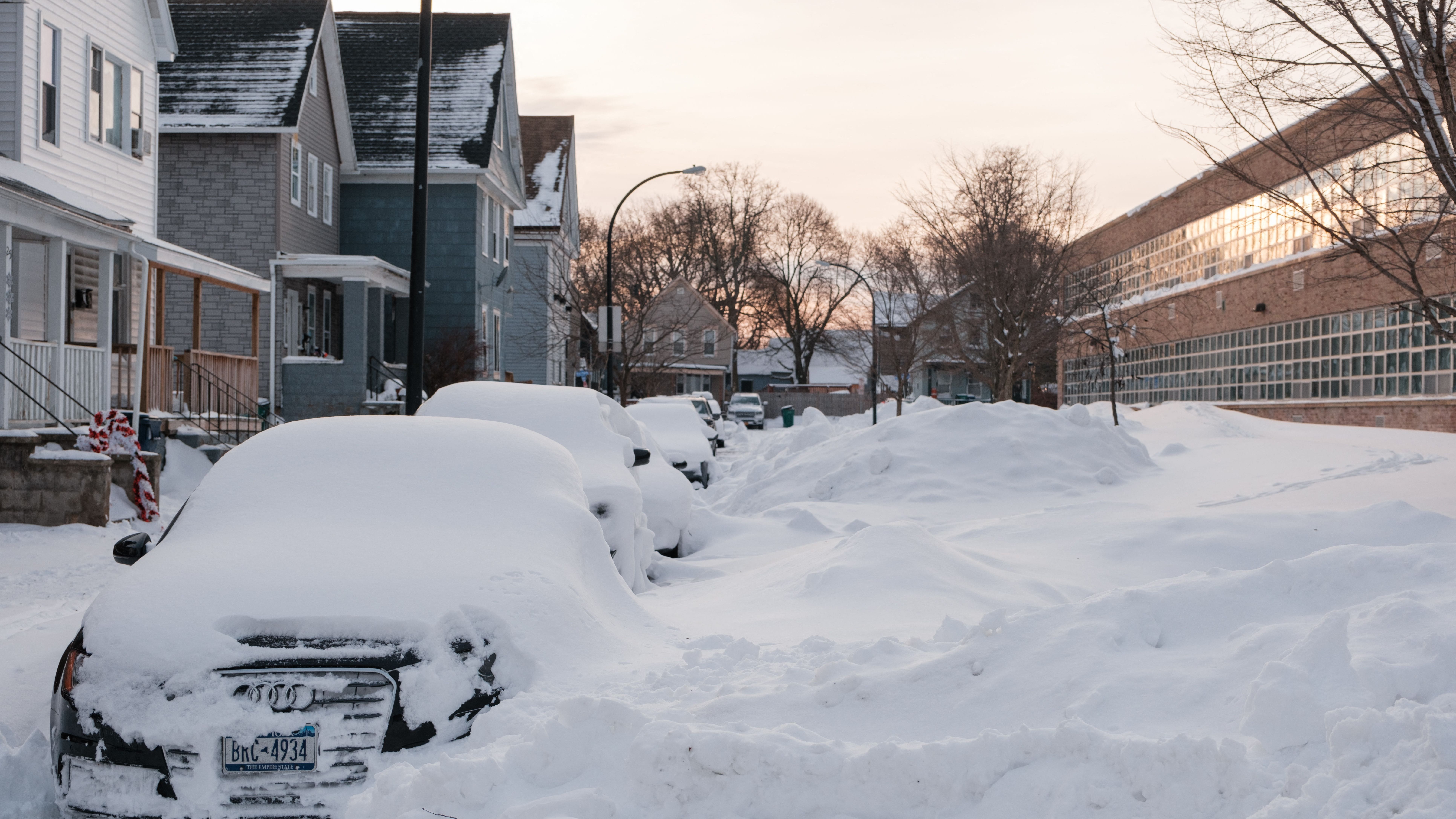

What is a polar vortex? How it affects snow and ice in the United States
A polar vortex is a large region of cold air that circulates over the North Pole. If the wind is strong, the wind will be suppressed, but if the wind weakens, it may sway or stretch.
Fifty years ago, a fascinating weather anomaly blanketed the United States in arctic snow weather, briefly sparking fears of a new ice age. Let’s call it the “snowy 70s.”
It was so winter-cold that the January 1977 cold snap was the only one ever reported to bring any trace of snow to the Greater Miami area of Florida.
“The 1970s certainly were a cold decade by historical standards, especially the late 1970s,” said Robert Henson, a meteorologist with Yale Climate Connections. “Two of the three coldest years in the United States over the past century (1925-2024) were 1978 and 1979. The coldest winters in the United States on record (dating back to 1895) were 1978-1979.”
The worst snowstorm in modern U.S. history occurred in the 1970s, Henson said. And three of the nine snowiest and coldest U.S. winters between 1950 and 2013 occurred in the late 1970s.
Here’s what happened:
The 1970s were historically cold.
Henson said the 1970s were certainly a cold period, not just in the United States but throughout the Northern Hemisphere.
In the 1970s, the United States actually recorded about 25% more daily lows than daily highs. But since then, the ratio of daily maximum to minimum temperatures has increased over the past 50 years, as reflected in data from about 1,800 weather stations, the American Weather Association said.
Why was it so cold? Was there “global cooling”?
At the global level, Henson said there is considerable evidence that the slight global cooling from the 1940s to the 1970s was primarily caused by the post-World War II industrial boom, particularly in the United States and Europe. “Before we introduced environmental regulations, post-war factories and power plants were spewing tons of pollutants into the atmosphere that blocked out the sun and cooled the local and global atmosphere.”
Pollution control efforts that began in the 1970s have made the air cleaner, but they also block out less sunlight. Reduced solar occlusion and anthropogenic greenhouse gases are warming the global climate, especially in regions where mid-century air pollution was particularly severe, such as the United States and Europe.
Regarding the weather, David Robinson, a distinguished professor and snow expert at Rutgers University, said the cold winters of the 70s were “associated with a jet stream that was often found further south than normal, which allowed arctic/polar air to flow into the lower 48 degrees. Extensive snow cover in North America in the winters of ’78 and ’79 (but not in ’77) likely played a role in keeping temperatures cold.”
“Of course, it’s a two-way street: it snows because it’s cold, and the snowpack keeps the region cold (higher albedo, the energy needed to melt the snow isn’t available to warm the air, and the storm’s track is further south, opening the door to more polar air).”
Fear of the approaching ice age
In the 1970s, Robinson said, there were articles in mostly popular magazines that talked about an impending ice age. “Paleoclimate studies at the time showed that the length of interglacial periods over the past million years was generally about 10,000 years, and that the interglacial period we were in lasted about 10,000 years. So it seemed possible that the Earth could move into another Great Ice Age within 100,000 years (or) over the next several thousand years.”
But, he said, “this was by no means a sign that an ice age was coming soon. Around this time, it was also becoming more recognized that humans were influencing the climate and that global warming would begin in the next few decades.”
“That means there was a lot of information out there that could be interpreted (or misunderstood!) in many different ways. That said, it’s safe to say that no serious climate scientist at the time feared an ice age for the next generation and beyond.”


