In October 2004, Steven Bryant was on probation for robbery when he went on an eight-day murder spree that left three people dead. At the final crime scene, he provoked the police by writing a message in blood.

History of execution by firing squad in the United States
Punishment by firing squad has a long history, and has recently attracted new attention as prisoners have chosen it as their method of execution.
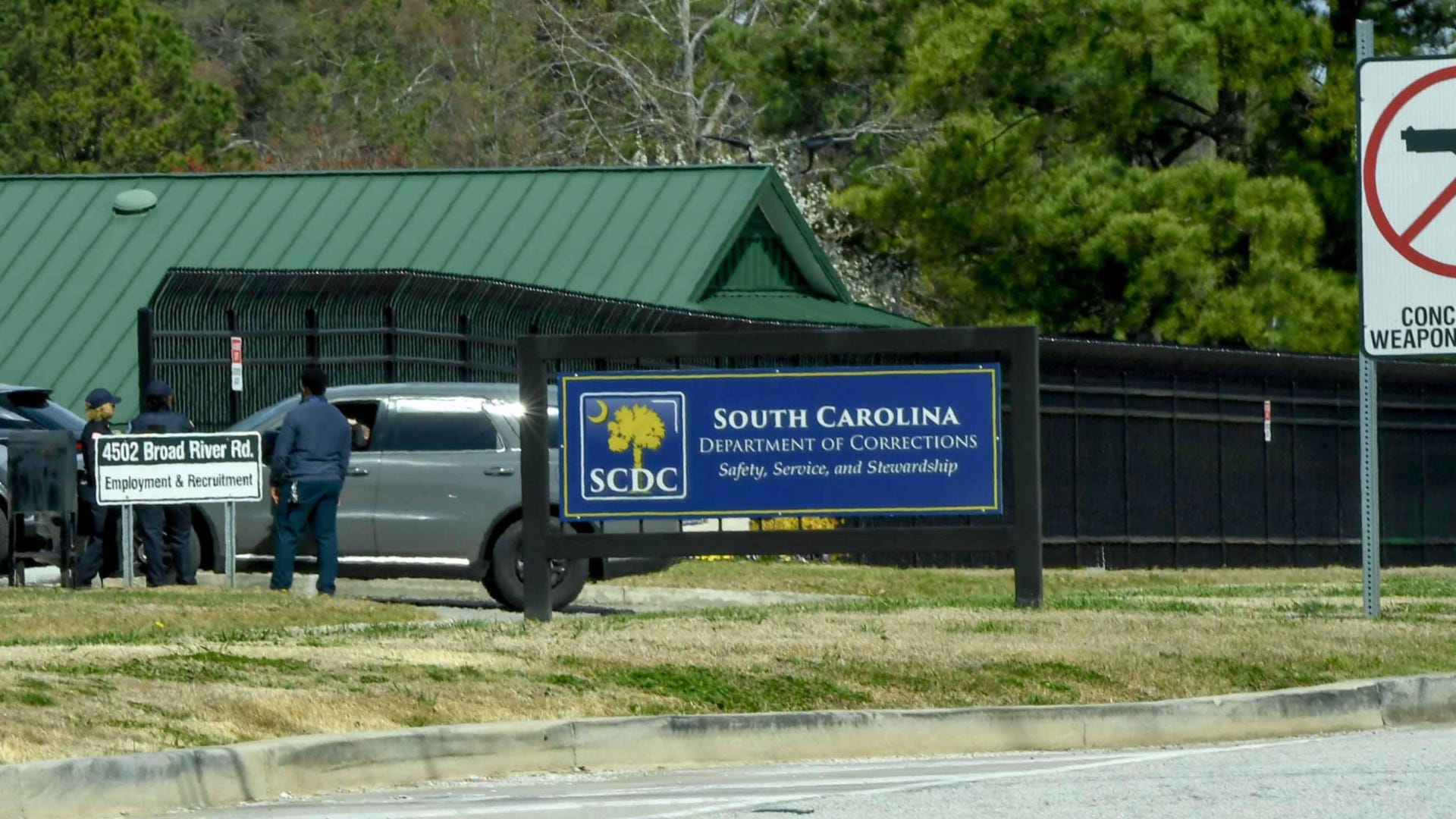
A South Carolina killer who murdered three people in a week and then provoked police with a message written in blood has become the third inmate executed by firing squad in the state this year.
Stephen Corey Bryant, who once scrawled “Catch Me If You Can” on a wall using the blood of 62-year-old victim Willard “TJ” Tietjen, was executed Friday, Nov. 14, for a 2004 murder. He was pronounced dead at 6:05 p.m.
Bryant’s executioner tied him to a chair and placed a hood over his head. Three volunteer correctional officers shot him simultaneously from 15 feet away.
Bryant’s lawyers had argued that he should not receive the death penalty because he was sexually abused as a child and suffered brain damage from his mother’s drug and alcohol use during pregnancy. The South Carolina Supreme Court earlier this week rejected those arguments and allowed the execution to proceed.
Bryant will be the 43rd inmate to be executed in the United States in 2025, the most inmates executed in a single year since 2012. He was also only one of six people executed by firing squad in modern U.S. history.
Here’s what you need to know about Bryant’s execution.
What was Stephen Bryant convicted of?
In October 2004, Steven Bryant was on probation for robbery when he went on an eight-day killing spree that left three people dead and one seriously injured.
The last person to be killed was Willard “TJ” Tietjen, who was shot nine times in his home just east of Columbia on October 11, 2004, after allowing Bryant to break in.
That afternoon, Tietjen’s wife and daughter kept calling him, but he didn’t answer. At 5:30 p.m., someone took his cell phone, but it wasn’t Tietjen. It was Bryant.
“TJ is dead,” he told Mildred Tietjen, Tietjen’s wife of 39 years, who testified during the sentencing phase of Bryant’s trial, according to the Sumter, South Carolina, newspaper The Item.
When Tietjen’s daughter, Kimberly Dees, called her father’s number, Bryant answered again and asked, “I’m having a great day. How are you?” Dees testified before saying he had killed his father three hours earlier.
When police arrived at Tietjen’s home, they discovered that he had been shot nine times and that the attacker had used his blood to write a provocative message on the wall: “Four victims in two weeks. Catch me if you can.” Tietjen’s eyes were burned with cigarettes and candles were lit around his body, according to court records.
Bryant also left a handwritten note in a manila envelope on Tietjen’s chest that read, “I am the light. I am so bright. I am the sun. I am truly yours, The Prowler.” A note on the table read, “Good luck finding me. LMFAO,” Item reported.
Earlier that week, Tietjen shot and killed three other men, two of whom died. Among them were his friend Clifton Gainey, 36, and 35-year-old Christopher Burgess, a stranger. A 56-year-old man named Clinton Brown was shot in the back and left for dead, but he survived.
Bryant pleaded guilty to all crimes. The judge sentenced him to life in prison for the murders of Mr. Gainey and Mr. Burgess, and the death penalty for the murder of Mr. Tietjen.
Who is Willard “TJ” Tietjen?
Tietjen was a devoted father, grandfather, and husband who retired from the Air Force after being stationed all over the world, from the Philippines to Germany to Thailand to Oregon.
The Item reported in 2008 that the daughter testified that her father took her to plays and concerts and taught her how to fish, hunt, roller skate, appreciate nature and respect her country.
“We spent many happy times together,” Dees said, adding that he taught her a very important life lesson: “The value of life. All lives have value…We are all part of God’s creation.”
On stage, Ms. Dees recalled how her 5-year-old son comforted them after the death of their beloved family patriarch.
“He said he would always be with me and make sure no one killed me,” she said, according to The Item.
Meanwhile, Mildred Tietjen testified that they married just three months after meeting on a blind date in December 1964 while her husband was stationed in Iowa, The Item reported.
“He had such a zest for life,” she said, then recalled his last words: “I love you.”
Why was Stephen Bryant executed by firing squad?
South Carolina allowed Bryant to choose from three execution methods: firing squad, electric chair, or lethal injection. If he doesn’t choose, the default method is the electric chair.
Firing squads are rarely introduced in the United States, but they appear to be gaining momentum as states say they are struggling to obtain the drugs needed for lethal injections.
Before this year, Utah was the only state to use this method, doing so only three times: in 1977, 1996 and 2010. Utah had planned to use the method on inmates in August, but the Utah Supreme Court blocked it over concerns about dementia.
South Carolina legalized firing squads in 2021 and began using the method this year, executing two inmates in April and May.
A defense lawyer who last witnessed an execution of this kind in April described it as “barbaric” and “a horrific act that belongs to the darkest chapter of history.” State officials defend the method as constitutional.
In addition to Utah and South Carolina, Mississippi, Oklahoma, and Idaho have also legalized firing squads. Idaho, which approved firing squads in 2023, plans to make them the state’s default method next year.
When is the next execution?
The next execution in the United States was that of Richard Barry Randolph in Florida for the 1988 murder of his neighbor Minnie Ruth McCollum, who was raped, beaten and stabbed to death in East Palatka, about 45 miles east of Gainesville.
If things go as planned, Randolph will be the 44th person executed in the United States this year, a number not seen since 2010.
Amanda Lee Myers is a senior crime reporter covering the death penalty for USA TODAY. Follow @amandaleeusa on X


