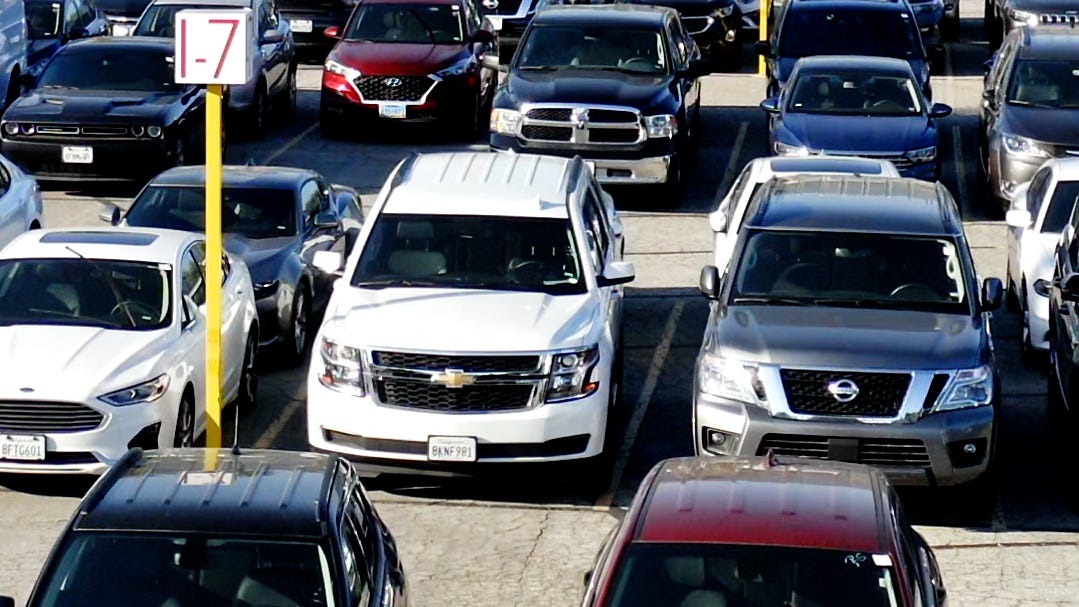

Used cars under $20,000: Top cities with great deals
Used car inventory under $20,000 has increased by $40,000 nationwide, with the most transactions occurring in major cities such as New York and Los Angeles.
america today
More new car buyers are taking out seven-year loans, a trend that highlights the rising cost of car financing.
Auto loans with terms of seven years or more accounted for 22% of all new car loans in the third quarter of 2025, near an all-time high, Edmunds reported.
The average new car customer borrowed $42,647 in the third quarter at an annual interest rate of 7%, with an average monthly payment of $754. Today, nearly one-fifth of new car buyers pay at least $1,000 a month.
Auto loans have steadily gotten longer in recent years as buyers try hard to keep up with rising prices. These days, car buyers seem to have just as many financing options as home buyers.
Home values tend to go up, but car values tend to go down.
The Trump administration launched its 50-year mortgage initiative on Nov. 9, touting it as a way to lower monthly payments.
However, a car and a house are completely different assets. Homes tend to appreciate. Most cars depreciate.
“It’s not money that’s coming back. It’s not capital that’s in the car,” Brian Moody, executive editor of Kelley Blue Book and AutoTrader, told USA TODAY earlier this year.
Another worrying trend is that many cars are depreciating in value faster than borrowers can repay their loans. You end up owing more than the car is worth, a predicament known as being “under water,” or having your loan upside down. The longer the loan, the greater the risk of slipping into the water.
The old rules of thumb for car buying, known as 20/4/10, were to make a 20% down payment, limit your loan to four years, and spend no more than 10% of your monthly income on transportation.
A few decades ago, three- or four-year car loans were the norm.
Five-year terms were “kind of a sweet spot” for auto loans in the early 2000s, Joseph Yun, a consumer insights analyst at Edmunds, told USA TODAY in an interview earlier this year. Yun’s own family took out a five-year loan in 2004.
“Now, 20 years later, the sweet spot seems to be six years. Many people are choosing seven years or more,” Yun said.
According to a report from Edmunds, only 10% of new car buyers currently choose to finance their car for four years or less.
The average price of a new car in September was $50,080, a record high, according to Kelley Blue Book.
Meanwhile, interest rates soared. The average interest rate on a five-year new car loan rose from 5% in August 2020 to 7.6% in August 2025, according to Federal Reserve data.
The longer your loan, the lower your monthly payments will be.
Car buyers typically choose longer loan terms because the longer the loan term, the lower the monthly payments. Dealer negotiations often focus on finding the right monthly payment amount, rather than the minimum selling price or interest rate, because it’s easier to understand.
“The only reason you would extend your loan term by seven or eight years is because you went to the dealership with a certain budget in mind, chose a car, and the salesperson or finance person came up with a number that you couldn’t afford,” Yun said.
However, the length of your loan has a significant impact on the interest you pay, which can drive up the total cost of your transaction.
Below is an example of a $40,000 car loan with a 7% interest rate, provided by Consumer Reports.
For a four-year loan, your monthly payments will be a hefty $958, but your total interest over the life of the loan will be capped at $5,977.
Extend your loan up to five years and reduce your monthly payments to $792. However, you would now be paying $7,523 in interest.
For a six-year loan, your monthly payments would drop to $682, but interest would increase to $9,101.
With a seven-year loan, your monthly payments will be $604. And now you’re paying $10,711 in interest.
“Yes, monthly payments are important,” Yun said. “But with interest rates this high, you’re paying five-figure interest on a six-year loan, seven-year loan, eight-year loan.”
“Underwater” loans are on the rise
Long-term loans at high interest rates are pushing more customers into the lurch.
Edmunds said a quarter of customers who traded in a used car for a new car in the last three months of 2024 owed more than their trade-in value. Trade-ins have substantially increased the price of new cars.
“If you want to trade it in and it’s underwater, that’s going to be a problem,” Consumer Reports monetary policy advocate Chuck Bell told USA TODAY in an interview earlier this year.
For used cars, the numbers can be even worse.
The average used car sold in August 2025 already had 72,557 miles on it, Cox said.
A typical five- or six-year-old car has already lost more than half of its value through depreciation. If you finance an aging car for another seven years, “halfway through the loan, your car will have no value,” Yun says.
Here are some questions to ask before taking out a seven-year car loan from experts.
Can I make a larger down payment?
The less you spend on your car, the less money you’ll need. With a larger down payment, buyers may be able to afford the monthly payments on a short-term loan.
The down payment “goes straight to your bottom line,” Bell said.
Can you afford to pay those payments for seven years?
Before taking out a seven-year car loan, consider how your monthly payments will impact your annual budget, including your home payment, other debts, and unexpected expenses.
Will you still own the car after seven years?
With a seven-year car loan, there’s a big risk of owing more than the car is worth. However, if you plan to keep the car until the loan is paid off, the negative equity will eventually disappear.
“If you want to keep the car for a long time, it doesn’t really matter in the end,” Yun says.


