A judge blocked the USDA’s threat to take back all SNAP funds from states that distributed food stamps in November.
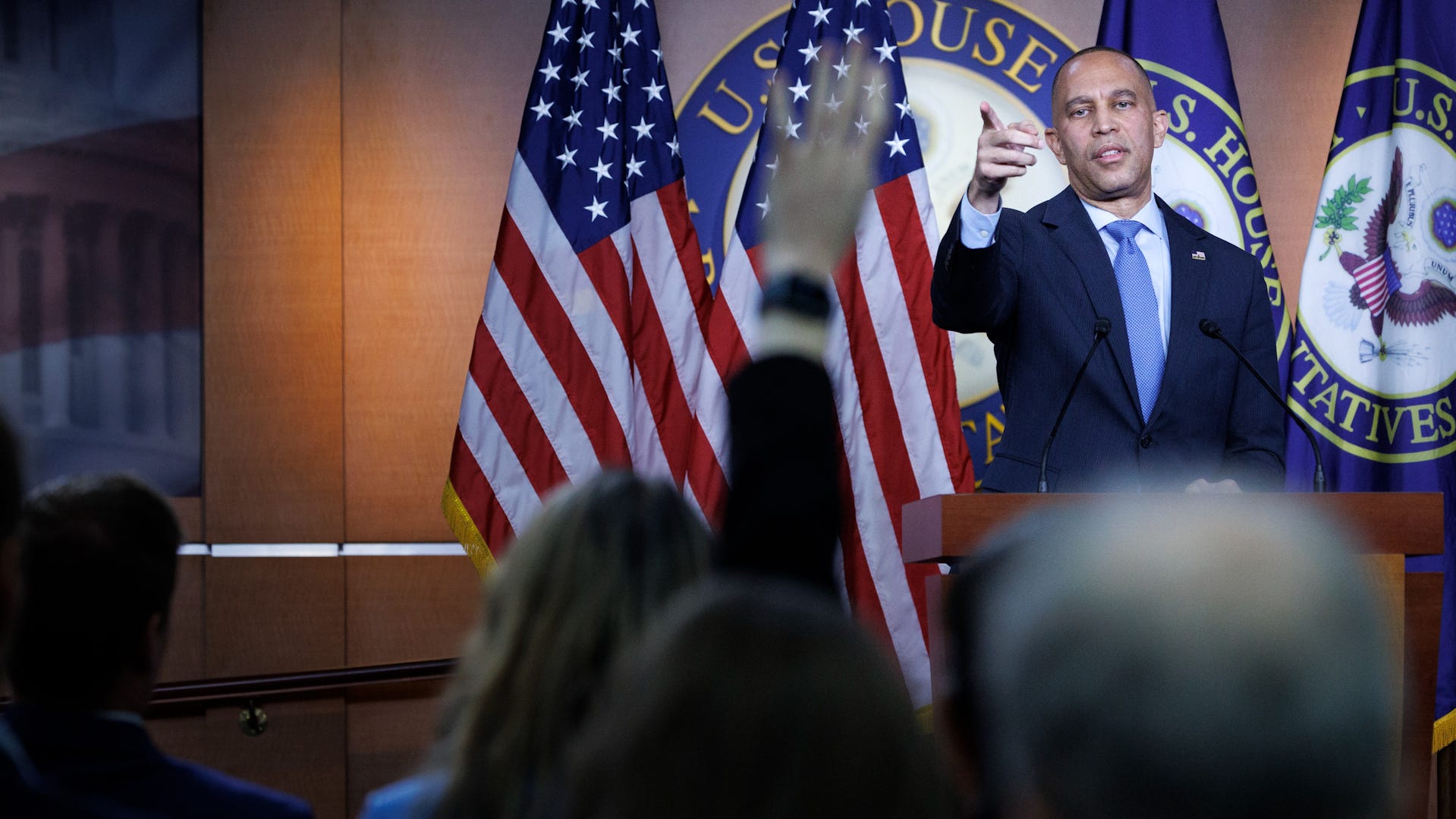

Congressional leaders react as government shutdown resolution approaches
House Speaker Mike Johnson and Minority Leader Hakeem Jeffries shared updates on shutdown negotiations.
- Some states distributed a month’s worth of federally funded food aid as soon as courts ruled that federally funded food assistance should be provided.
- The Department of Agriculture then told states that they had sent out food stamps prematurely and needed to take back at least some of their food stamps.
- The Massachusetts federal court disagreed.
A federal judge on Nov. 10 ordered that states that distributed full benefits to SNAP recipients over the weekend do not have to seek refunds.
A flurry of court decisions in recent days has caused confusion and frustration for tens of millions of Americans who are waiting for final information on when they will receive the federal food aid they rely on.
Massachusetts Judge Indira Talwani blocked the Department of Agriculture’s order on Saturday, Nov. 8, that would have required states to recoup benefits distributed in November before the Supreme Court’s ruling the night before.
“What you have now is a mess of the government’s own making,” Talwani told the court.
The U.S. Department of Agriculture said in a Nov. 7 memo that it would send benefits to states, following a federal judge’s order in Rhode Island to provide full benefits for November. Hours later, the Trump administration received a temporary injunction from the Supreme Court, but more than a dozen states had already distributed the funds to millions of Americans.
Late Saturday night, the USDA in a separate memo called for states to take back the funds they distributed. The agency ordered states to stop disbursing all food assistance benefits, saying in a memo that it “does not have the authority” to disburse the full amount and must instead disburse only a portion of the funds.
“Countries must immediately reverse the actions they took to issue full SNAP benefits in November 2025,” the memo states.
But many states asked Judge Talwani in the Massachusetts lawsuit against the government to block the USDA from carrying out its threats.
she agreed. “Even if there was an error here, it seems to me that the states acted fairly reasonably to follow the Nov. 7 guidelines,” she said.
At least 17 states have already announced full benefits, according to a study by the Center for Food Research and Action. The list includes several plaintiffs in the Massachusetts lawsuit, including California, Michigan, New York and New Jersey.
Talwani pointed out that the guidance issued by the Department of Agriculture does not mention the possibility of appeals or suspensions, nor does it instruct states to withhold funds.
“We’re not saying, ‘Don’t do anything because we’re appealing and asking for a stay,'” Talwani said.
Justice Department attorney Tyler Becker argued that the states knew the Trump administration was appealing Rhode Island’s decision and should have waited until they knew the results before giving food aid to people.
“States have decided to give up their guns,” he said.
Michelle Pascucci, a state trial attorney with the Massachusetts Attorney General’s Office, said the USDA could have issued a new guidance memo once the Supreme Court’s stay went into effect.
“They could have submitted that correction at any time within the 24 hours between the clerk’s stay in the Supreme Court and the email sent at 10:30 Saturday evening,” she said.
Tarawani questioned how states expected to recover funds from SNAP recipients that the Department of Agriculture may have already disbursed, saying the administration should have come to court instead of “sending threatening letters on Saturday night.”
First SNAP confusion in 60 years
In late October, the Department of Agriculture announced that November benefits from the Supplemental Nutrition Assistance Program, known as SNAP, would not be available during the government shutdown. The fund has been used to provide benefits during past shutdowns, but the agency said it does not believe it is legally allowed to use the emergency fund created by Congress.
This decision led to the first destruction of food benefits in SNAP’s more than 60-year history.
The U.S. Senate reached a tentative agreement on November 9 to reopen the federal government and provide funding for multiple agencies and programs, including food assistance.
The deal, agreed to with eight Senate Democrats, reopens the government until January 30 and provides high levels of funding for SNAP through September 2026.
The Senate could vote to approve the deal as early as Monday night, Nov. 10, with the House expected to vote later in the week.
Sarah D. Wire, USA TODAY’s senior national political correspondent, can be reached at swire@usatoday.com.


