Americans over the age of 60 are struggling financially to meet their basic needs. People with the lowest incomes may die sooner, a new report finds.
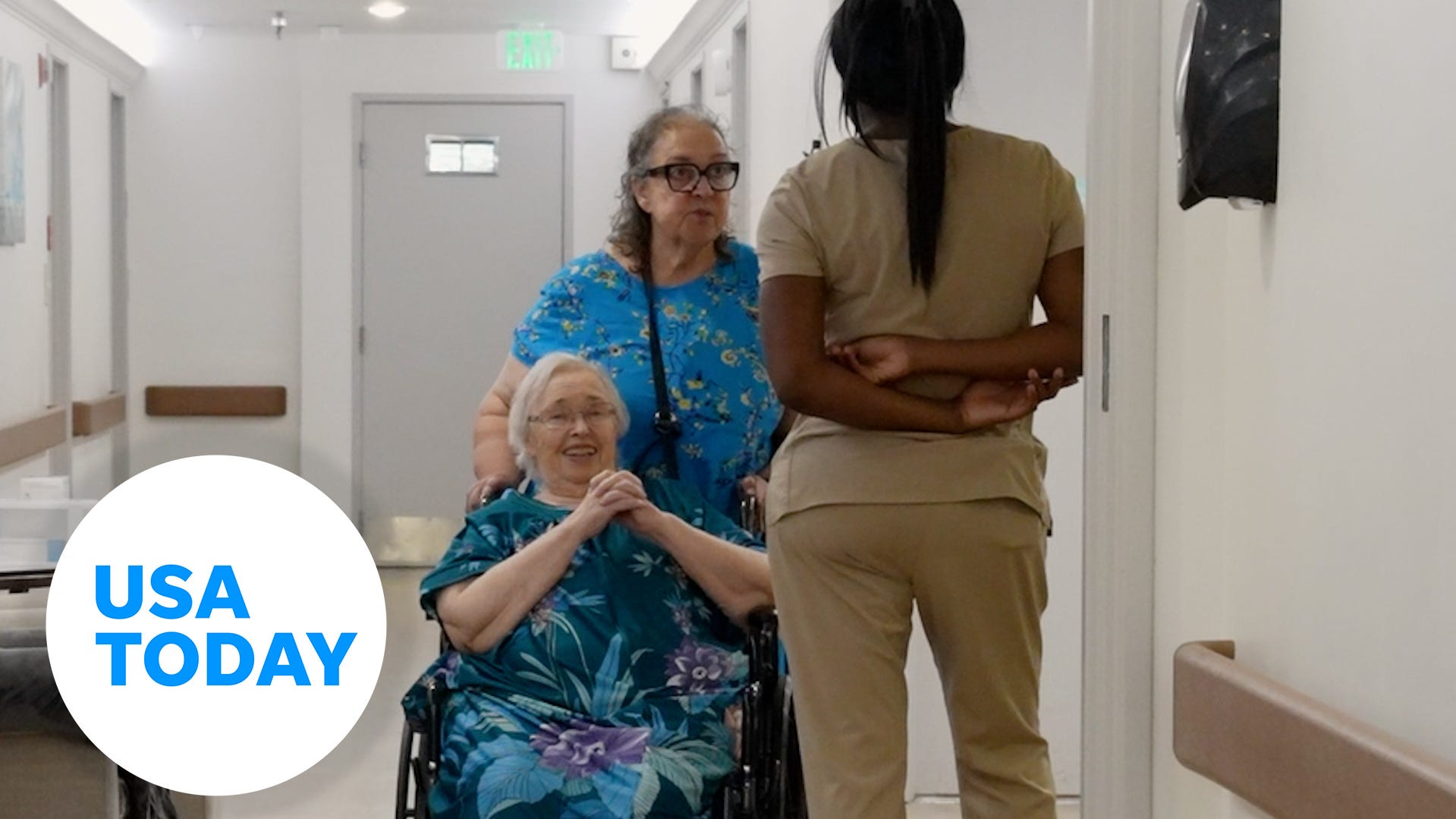

Devoted daughter seeks help when caring for her mother becomes too much
Miriam Sabir reveals how a nursing home in Holladay, Utah, is coping with caring for her elderly mother, Connie.
Seniors who earn less than $20,000 a year die on average nine years earlier than those who earn more than $120,000 a year.
That’s the conclusion of a new analysis showing a strong link between longevity and income in later life.
“These findings suggest that the more economic resources older adults have, the longer they live,” the study authors wrote in a report from the National Council on Aging and the Leading Age Long-Term Services and Support Center at the University of Massachusetts Boston.
The report examined data from the National Health and Retirement Survey to assess the financial stability of Americans age 60 and older and how it affects their life expectancy.
The results are consistent with years of research showing that income and wealth are strong determinants of life expectancy, said Dr. Stephen Wolf, a professor of medicine at Virginia Commonwealth University who specializes in family medicine and population health. And the problem is getting worse as income inequality in the U.S. widens, he said.
“This gap is widening. This has always been true, but it’s a bigger problem now than ever before,” Wolf told USA TODAY. “As a result of (widening income inequality), the gap in life expectancy is widening further.”
Jessica Johnston, senior director of the National Council on Aging’s Center for Economic Wellbeing, said many older Americans are faced with difficult financial choices. Should they spend their money on medicine, food, and shelter?
“We’re not talking about luxuries here. We’re talking about 34 million households on the brink of not being able to afford the necessities of life. This feels very different from the American Dream that many of them signed up for when they were young and working hard and playing by the rules,” Johnston said.
Report finds that older Americans cannot afford to live with ‘dignity’
In addition to the wide disparity in life expectancy between high- and low-income Americans, the report found that the majority of Americans 60 and older struggle to withstand sudden financial shocks, which most will inevitably experience as they age.
A measure called the Aging Index shows the average cost of living for older adults to meet their basic needs, which can be higher than the expected cost of living for younger Americans because of increased medical needs and costs associated with services such as long-term care. The analysis found that about 45% of older Americans do not earn enough to meet that threshold.
Mr Johnston said: “Adequate income does not mean retirement comfort; what really matters to older people is survival.” They “don’t have the luxury of growing old with dignity.”
Some older adults who cannot afford basic care rely on family members to perform that role, which has a negative impact on intergenerational wealth, Johnston said.
People without family members to provide care or financial support may be forced to choose between basic needs such as housing, food, and medical attention. She says some people are having poor health outcomes by not getting preventative care or not taking expensive medications.
Approximately 80% of elderly households, or approximately 34 million households, do not have the financial means to survive shocks such as sudden bereavement, serious illness, or the need for long-term care.
However, most older people will experience such a shock, according to the report. Over the next 20 years, more than one in four Americans over the age of 50 will experience a disruption that causes their net worth to decline by more than 75%. For adults over 70, more than two-thirds will experience a financial shock over a nine-year period, the report said.
How your income and assets affect you when you die
The analysis found that the death rate for older Americans in the bottom 60% of wealth was nearly twice that of the top 20%.
Wolf said income is closely related to other socio-economic factors that determine longevity. For example, he said, studies looking at life expectancy and race have found that people of color tend to live shorter lives. Property values, education level, and even the zip code you live in all come into play in determining life expectancy, Wolf said.
Because low-income Americans are unemployed or underemployed, they may lack access to comprehensive health insurance. That makes them more likely to forego doctor visits and medications, Wolf said.
Low-income people also have difficulty affording healthy foods recommended by doctors, such as fresh produce, and tend to choose cheaper, higher-calorie foods. Low-income neighborhoods in so-called food deserts may have no grocery stores at all or lack green spaces such as parks for children to get physical activity. They may be living in unsafe housing conditions.
All of these factors can shorten lifespan, he said.
In some U.S. cities, life expectancy varies widely by region.
For Dr. Bisola Ojikutu, Boston’s public health commissioner, it’s no shock that low-income seniors die on average nine years earlier than wealthier seniors.
There is a dramatic difference in life expectancy of about 23 years between residents of Roxbury, one of the lowest-income neighborhoods with a high proportion of black residents, and residents of the predominantly white community of Back Bay, just three miles away. That’s according to an analysis published in 2023.
From 2015 to 2021, the average life expectancy of Roxbury residents was 68.8 years and the median income was $41,211. Back Bay residents at the time had an average life expectancy of 91.6 years and a median income of $141,250.
Although the 23-year gap is about 10 years shorter than previously reported, Ojikutu said the city hopes to fully close the gap over the next 10 years “so that residents don’t have the rest of their lives dependent on their neighborhoods.”
Black men die 10 years earlier than other population groups.
Ojiktu said that Boston’s new Longevity and Health Initiative focuses on residents’ entire lifespans to achieve that goal, because poverty and longevity are directly influenced by factors experienced from birth.
“Health and wellness are directly correlated to the quality and quantity of social determinants of health, such as access to fresh and nutritious food, access to affordable and safe housing, access to quality education…access to good jobs and economic mobility,” she said.
“By building that foundation throughout your life, you will have wealth, opportunity, and the ability to overcome shocks when you are older.”


