More cases of colorectal cancer have been discovered in adults under the age of 50, and a new collection of studies suggests that a surge in screening may be linked to many of the more recent diagnoses, but this is not an overall trend.
In 2018, the American Cancer Society updated guidelines for colon and rectal cancer screening, recommending that average-risk adults be screened before age 45 to 50 years old.
Then, in 2021, the US Preventive Services Task Force lowered the recommended age to begin screening for colon and rectal cancers from 50 to 45.
Changes in screening guidelines are associated with a recent increase in early stage colorectal cancer diagnosis, but do not explain the general increase in young adults. This is a trend that began in the mid-1990s and includes late stage cancer. Colorectal cancer refers to colon cancer that begins in the colon and rectal cancer that begins in the rectum.
“The factors behind the rise in incidence remain unknown, but many research efforts are underway. There are studies covering the range from microplastics to ultra-processed foods, as well as many other intestinal exposures introduced in the second half of the 20th century when this began.”
Lowering the screening age “may have facilitated previous detection of missed cancers”, but there is further work to identify the drivers behind the ongoing rise in colorectal cancer at younger ages.
“Factors beyond the screening guidelines may contribute to an overall increase in colorectal cancer incidence,” Rinaldi said. “There remains a lot of work to identify causal factors, whether on an environmental, genetic or population basis, which can target prevention and potentially reversal of this trend.”
Now research An American Cancer Society published Monday in the Jama Medical Journal found that the share of US adults ages 45 to 49 has risen from 20.8% in 2019 to 33.7% in 2023 from 19.7% in 2021.
“We were waiting for the screening to take off in this age group,” Schafer, author of the new screening study, said in an email. “But the real thrill is the translation into early diagnosis, meaning intense treatment and life-saving.”
The second study, also conducted by the American Cancer Society and published in Jama on Monday, found that the prevalence of early-stage colorectal cancer diagnosis in 45-49 adults increased from 9.4 per 100,000 in 2019 to 11.7 per 100,000 in 2021 to 17.5 per 100,000 in 2022.
This leads to a relative increase of 50% between 2021 and 2022.
“If screening was the cause of the rise, it was to increase early instead of late disease,” says Schaefer, lead author of the second paper.
“Local stage diagnosis was rare in this age group prior to screening, due to the lack of symptoms,” Schaefer said of early stage cancer that had not spread to other parts of the body. “Yes, it was actually a bit shocking to see the initial incidence rate per 100,000 per 100,000 double from 9.4 to 17.5.”
As elevations in colon and rectal cancer persist among younger adults, public health experts now encourage people to know warning signs and be screened when they are eligible.
Signs and symptoms to watch out for
More than half of people diagnosed with colorectal cancer before the age of 50 are not eligible for screening as they have not yet reached the recommended age of 45. And most qualified individuals have not yet been screened, said Jessica Star, a quasi-scientist in cancer risk factors and a screening surveillance study at the American Cancer Society.
Whether someone is recommended for screening or not, they should still monitor for signs and symptoms of colon cancer and talk to doctors if they notice it, she said.
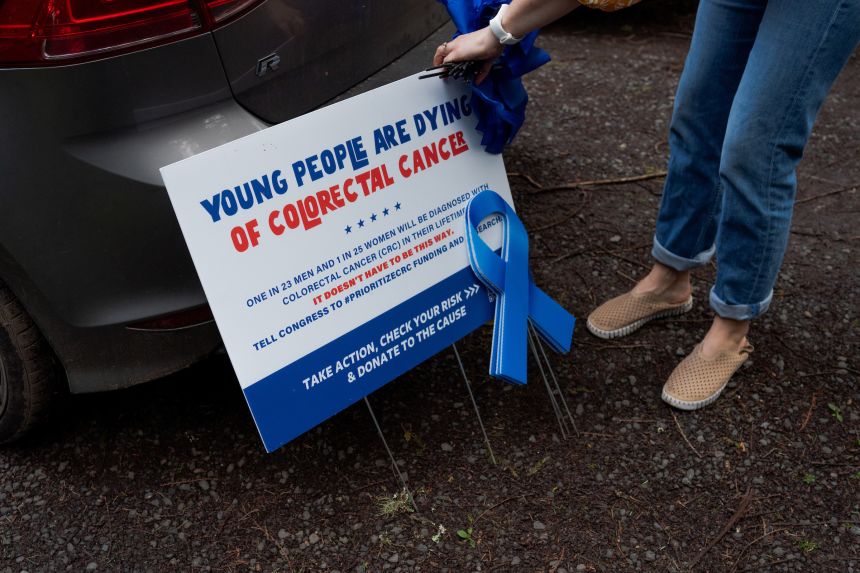
In the United States, approximately one in 23 men and one in 25 women are diagnosed with colorectal cancer throughout their lifetime.
The most common symptoms are “Rectal bleeding,” Starr said in an email, adding that 41% of patients under the age of 50 tend to experience this condition compared to 26% of patients over the age of 50.
“Youth, especially young people, are reluctant to talk about these types of symptoms, but they can actually save their lives,” Starr said.
“Other important symptoms include persistent changes in intestinal habits, stool shape, reduced appetite, and weight loss. People with any of these symptoms that last several weeks should follow up with a doctor’s visit,” she said. “If you’re young and your concerns aren’t addressed, get a second opinion. There are too many stories of young people saying they have hemo and discovering they have cancer a few months or years later.”
When 33-year-old Kelly experienced symptoms of colorectal cancer after the birth of her first child, she told her that doctors were tied to her postnatal and internal hemo.
“One day I went to the bathroom and I looked down and you would have thought it was my moon time, and it definitely wasn’t.
When she noticed a lot of blood again, she took a photo and showed it to her primary care doctor. The doctor immediately ordered a colonoscopy. That’s why she was diagnosed with stage III rectal cancer in 2020 at the age of 28.
“Advocacy is huge,” Spill said. “If you don’t push, push, or push, you don’t know where you’re, especially as a new mom.”
The spill was treated with an immunotherapeutic drug called dostallimab and is now a healthy mother of three. She remains cancer-free.
As almost all colorectal cancers begin as precancerous polyps of the colon or rectum, getting screened can help reduce the risk of colorectal cancer. However, through screening, these polyps can be identified and removed before they become cancerous.
Current options for colorectal cancer screening for people at average risk include stool-based fecal testing every year or every three years. Traditional colonoscopy is performed every 10 years. Virtual colonoscopy is performed every five years. Alternatively, an S-shaped S-shaped S-shaped S-shaped S-shaped S-shaped S-shaped procedure that involves examining the lower part of the colon every five years using a tube-like instrument called an endoscope.
Another study published Monday in Jama found that new screening eligible people are more likely to complete the screening than those asked to actively choose to choose a colonoscopy, fecal test, or screening without automatically mailing a fecal test kit at their home address.
“One other important question is how to screen more people, especially how to get people without access to healthcare, a group that didn’t see much increase in screening in our study,” Schaefer, who was not involved in the study, said in an email.
According to the National Colorectal Cancer Round Table, despite recent increases in screening, more than one in three people over the age of 45 are estimated to be screened to be recommended.
There are other steps people can take to prevent colorectal cancer.
“There are many things people of all ages can do to reduce risks: smoking, maintaining a healthy weight, physical activity, avoiding excessive alcohol consumption, eating a healthy diet with fewer red and processed meats, and whole grains, fruits and vegetables,” Starr said.
According to the American Cancer Society, more than half of all colorectal cancers in the United States are attributable to these modifiable risk factors.
“There have been several studies that work to identify factors that contribute to the development of colon cancer. Obesity is associated with early-onset disease, so maintaining a physically active lifestyle and healthy weight is important,” Rinaldi said. “I also recommend avoiding tobacco, sophisticated grains and sugary drinks, and instead focusing on consuming a plant-based, fiber-rich diet.


