Securing trucks carrying aid to Gaza is an act of balancing the Abu Mugsaib family. Getting too close to Israeli military checkpoints can be fatal. However, staying too far gives the marauder the opportunity to first reach valuable cargo.
“This is the biggest challenge we face. We cannot get close to our military positions, and by doing so, we are at risk,” a member of the group acting as truck protection told CNN. Two weeks ago, Hamas killed one of his team members, and he said two were injured in an Israeli fire last month.
As law and order break down further and hunger crosses Gaza, institutions seeking assistance to territorial warehouses and distribution points rely on groups such as Abu Mugsaib.
“When the truck enters (Gaza), you will either be intercepted by the looters or receive them before they are overwhelmed by the crowd,” said the man who asked to remain anonymous for security reasons.
“When it comes to our weapons, they are simple family-owned firearms, they also have sticks and batons.”
Aid workers are increasingly attacked by armed marauders seeking to resell aid at a legal price, and crowds of hungry people hoping to feed their families.
The United Nations this week said it was struggling to get aid where it needed most, and denounced Israel for delaying its fleets by making the process too cumbersome.
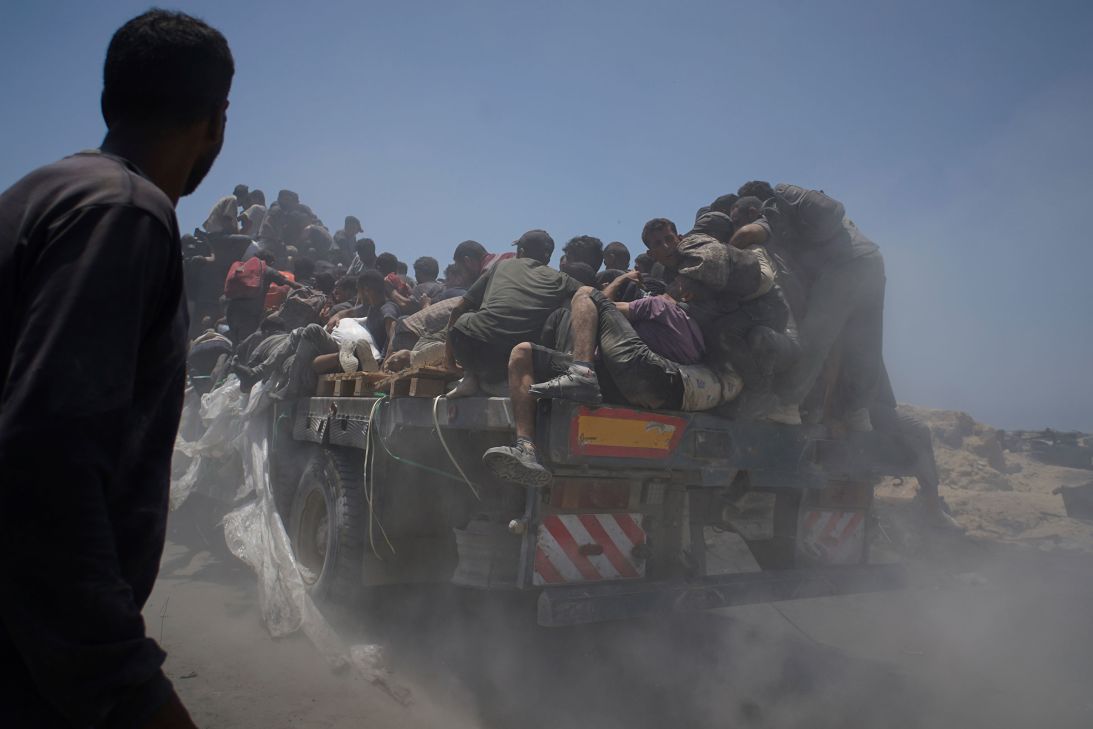
The World Food Programme said on Sunday that Israel agreed to streamline the process and allow alternative routes to be used, but the UN said most of the trucks are still blocked.
In the face of allegations that it was intentionally starving the Gaza population, Israel denounced the United Nations, saying it didn’t properly distribute supplies, and accusing Hamas of stealing aid.
In the absence of official security, the Abumugsaib family and other groups are intervening.
“International organizations such as the World Central Kitchen and the World Health Organization (WHO) have asked to ensure the provision of aid. …After we were successful, our family-based group was formally established to serve that purpose,” a member of the clan told CNN, adding that the family is part of the Tarabin tribe, a prominent Bedouin family.
“We will coordinate with several other families and handle the security of the delivery of aid,” he said, adding that unlike other groups, Abu Mugsaib has not cooperated with either Israel or Hamas.
A spokesman for those who have said that the organization, in partnership with the “elders of different communities” and the Gaza Ministry of Health, “when critical aid is passing… when the community is informed and that the item is understood to be a life-saving medical aid.
It’s a dangerous business to accompany a truck. The Clan sent one video to CNN. This shows that members are escorting a fleet of 10 trucks for the non-profit World Central Kitchen. It shows an armed man – some are masked, some are wearing hibis vests – and they were speeding up on cars along Sarah Al Din road in Deia Al Bala and shot in the air.
People can see them running across the road, but no one will try to intercept the convoy.
CNN contacted World Central Kitchen for comment.
A family member who spoke to CNN said they sometimes provide free protection while receiving payments from some groups.
“Like the World Health Organization, we are voluntary when it comes to medical or infant formula. For private sector cargo and commercial goods, we are paid in return for the risk we take. Some organizations also offer small payments to cover fuel, ammunition and similar costs,” he said.
The UN said the time-consuming approval process for Gaza to get assistance often leads to trucks being stuck in one place for a long time, attracting a large number of people.
Olga Celevko of the UN Humanitarian Agreement Office (OCHA) accompanied one of the convoys who had attempted to deliver aid from the Kelem-Shalom border intersection earlier this week.
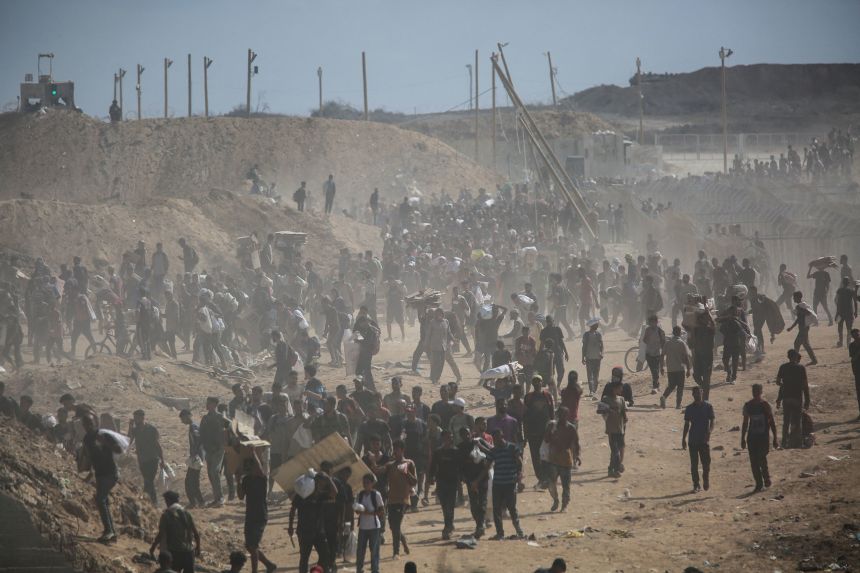
She said the convoy was held for two and a half hours at checkpoints in Israel. “By the time we were allowed to pass, we met tens of thousands of hungry, hopeless people on the road who had offloaded everything directly from the back of the truck,” Chelevko said.
The UN and its partners have offloaded 2,134 trucks of aid at Gaza intersection since May 19, when Israel partially lifted the lockdown imposed in March.
The United Nations said that the majority of them, about 2,010 trucks, had been collected, but only 260 arrived at the intended destination. Over 1,750 people were intercepted – peacefully by hungry people or powerfully by armed gangs.
Israel accused Hamas of stealing aid, but internal US government reviews found no evidence of widespread theft.
More than 1,060 people have been killed and 7,200 have been injured while trying to access food in Gaza since May, according to the United Nations. Most died near a distribution point established by the Gaza Humanitarian Foundation (GHF), a controversial private venture backed by the US and Israel.
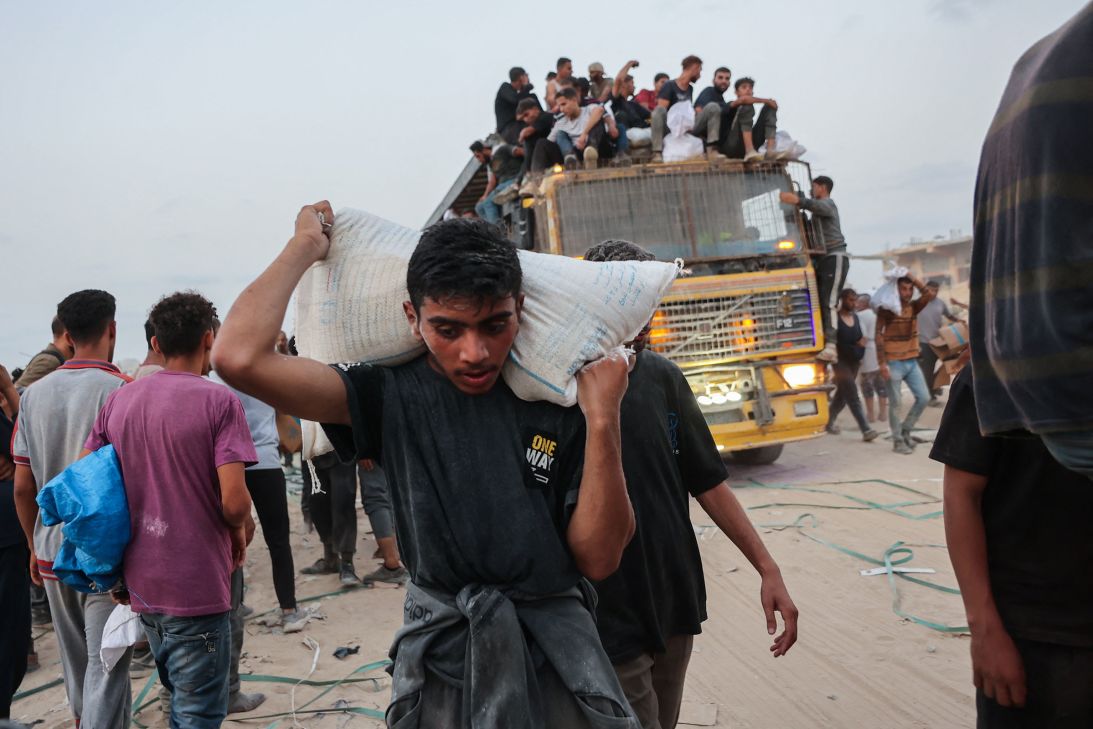
According to humanitarian agencies, too little aid reaches those in the most needy.
Along the way, Eyad Al-Masri, a 31-year-old father of two with a third child, was buying food from those who got it at the infamous, dangerous aid distribution point. The prices were high, but still lower than the market.
However, on Saturday, he decided to go to a point near Netzarim in central Gaza.
He’s a general story. The integrated food security stage classification (IPC) said Tuesday that “the worst-case scenario of hunger” is unfolding in Gaza.
The territorial health ministry said Tuesday that 900,000 children were hungry and 70,000 people were already showing signs of malnutrition.
“I felt there was no other option,” Al Masri told CNN. “When the truck arrived, I was shocked to see the number of armed burglars, some carrying knives with firearms, and working in large groups.”
Al Masri managed to get a box of food and was delighted with the prospect of giving at least some of the things they desperately needed to his child and pregnant wife. “But as I left the area, a man armed with a knife came to me and tried to get the box with force,” said Al Masri.
He offered to split the contents, but the attacker insisted on taking everything. “When I refused, he stabbed me in my head many times,” he said.
Following the thief, Al Masri didn’t realize he was bleeding. He was focused on getting back at least some food. He eventually managed with the help of others.
“There are hungry people who come to these distribution areas, but they can’t get anything because of the armed groups,” he said.
Members of the Abu Mugsaib clan said the attacks on his group came from all sides of other families, organized gangs of marauders, Hamas and Israeli forces.
He said in July a member of the escort team was shot dead by Hamas. He later said that the murder was a mistake.
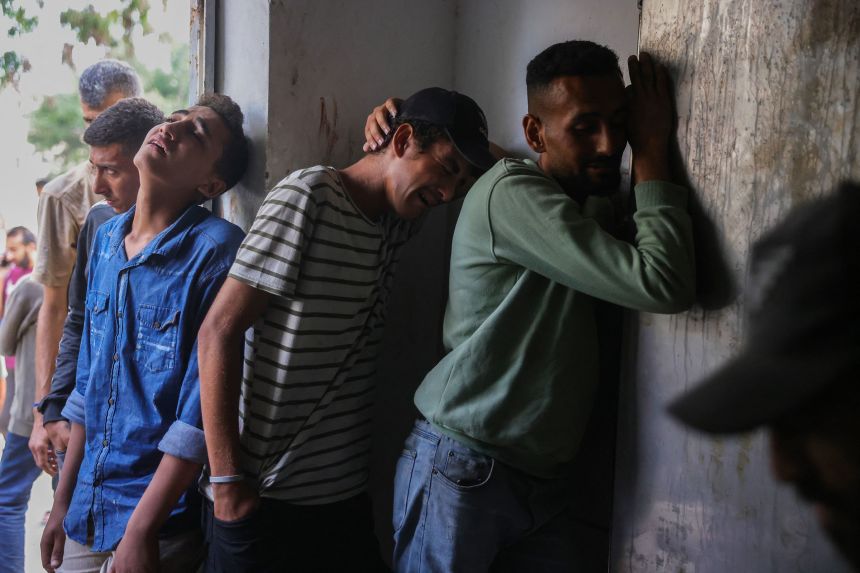
“A month ago, (Israel forces) fired a vehicle carrying members of the escort team, causing injury to two men,” he added.
However, he added that the group will continue to provide security as long as it needs to be.
“Vulnerable people need food and medicine urgently. We are not a substitute for any authority, and no one is aiming to exchange it,” he said.
However, he acknowledged that the group’s power was far away. “We are under strict instructions to not harm civilians. …Even if they could seize the truck in such cases, we will let them take it without confronting them.”


